Composting Isn't Always the Hero Move You Think It Is
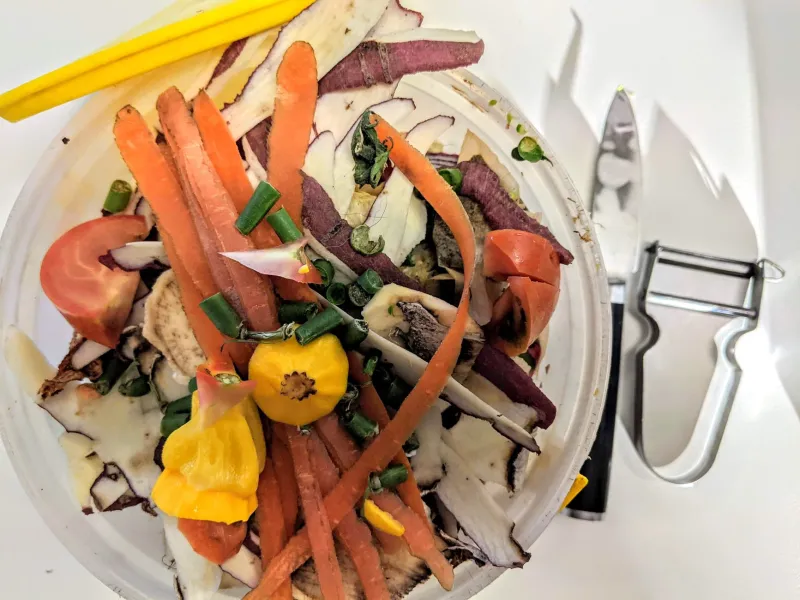
There's a particular kind of satisfaction that comes with scraping your coffee grounds and vegetable peels into a compost bin. It feels decisive. Responsible. Like you're opting out of the wasteful system entirely. And for a lot of Americans, composting has become the cornerstone of a green lifestyle — the one habit that makes everything else feel more justified.
But here's the thing nobody in the sustainability space really wants to say out loud: done wrong, residential composting can be genuinely bad for the environment. Not "not as good as you hoped" bad. Actually, measurably harmful bad. And the uncomfortable truth is that most home compost setups in the US are done wrong.
The Methane Problem Nobody's Talking About
Organic matter breaking down is a natural process, but how it breaks down matters enormously. When food scraps decompose with adequate oxygen — the way a well-managed compost pile should work — you get carbon dioxide and nutrient-rich soil amendment. When they decompose without oxygen, which is what happens in a neglected backyard bin, a sealed container, or yes, a landfill — you get methane.
Methane is roughly 80 times more potent than carbon dioxide as a greenhouse gas over a 20-year period. That's the number that should make you stop and reread your compost bin's instruction manual.
A 2020 study published in PLOS ONE found that improperly managed home compost bins can generate methane emissions comparable to landfill disposal of the same organic material. The culprit is almost always the same: too wet, too compacted, not enough turning, wrong ratio of greens to browns. Which, let's be honest, describes the backyard compost situation in millions of American households.
The irony is brutal. People set up compost bins specifically to avoid sending food waste to landfills, but if the bin turns anaerobic, they've essentially recreated landfill conditions in their own backyard — just without the methane capture infrastructure that modern landfills increasingly use.
What Actually Happens When the Truck Comes
Municipal composting programs sound like the obvious solution, and in some cities, they genuinely are. But "curbside compost pickup" is not a monolithic thing, and the destination of your green bin contents varies wildly depending on where you live.
In San Francisco, which runs one of the most sophisticated urban composting operations in the country, collected organics go to Recology's large-scale composting facilities where temperature, moisture, and aeration are carefully managed. The resulting compost is sold to California vineyards and farms. That's the gold standard.
In other cities, the story is murkier. Some municipalities that offer organic waste collection actually send a portion of it to anaerobic digestion facilities — which do capture the methane and convert it to energy, so that's not necessarily a bad outcome, but it's not composting. Others contract with facilities that have faced regulatory violations for improper management. A 2022 investigation by the Environmental Integrity Project found that several large-scale composting operations across the Midwest and Southeast were releasing significant amounts of methane due to inadequate turning and pile management.
And then there's the contamination issue. When non-compostable materials — those "compostable" plastic forks, greasy pizza boxes, meat scraps in cities that don't accept them — end up in the collection stream, entire loads can be rejected and sent to landfill anyway. Seattle's composting program, generally considered strong, still reports contamination rates that result in periodic load rejections.
The Programs Actually Worth Your Time
This isn't an argument against composting. It's an argument for composting well, which means knowing what you're actually working with.
Programs worth joining: San Francisco and surrounding Bay Area counties consistently rank at the top for diversion rates and end-product quality. Portland, Oregon's composting infrastructure is genuinely excellent. New York City's curbside organics program, which expanded citywide in 2024, sends material to facilities with strong track records, though the program is still scaling. Boulder, Colorado and Austin, Texas both have municipal programs with transparent reporting on where material ends up.
Programs to scrutinize: If your city recently launched a composting program as part of a broader sustainability PR push, it's worth asking some pointed questions before you assume your scraps are being handled responsibly. Look for annual diversion reports, facility partnerships that are publicly disclosed, and end-product certifications like the US Composting Council's Seal of Testing Assurance.
Home composting done right: If you're going the backyard route, the rules are non-negotiable. Turn your pile at least once a week. Maintain a carbon-to-nitrogen ratio of roughly 25:1 — that means a lot more dry leaves and cardboard than food scraps. Keep it moist but not soggy. If you can't commit to that, a tumbler composter is significantly more forgiving than an open pile and reduces anaerobic pockets dramatically. Bokashi systems, which ferment rather than compost and can handle meat and dairy, are another legitimate option for apartment dwellers.
The Certification Gap
One of the more frustrating aspects of the composting landscape is how little standardization exists at the consumer level. There's no national certification that tells you, definitively, that your city's program is well-managed. The US Composting Council does certify finished compost products, but that doesn't tell you much about the process that created them.
What you can do is ask your waste hauler direct questions: Where does collected organic material go? Is the facility USCC-certified? What's the contamination rejection rate? What percentage of collected organics actually becomes finished compost versus being diverted elsewhere? Cities with strong programs will have these answers readily available. Cities with programs that exist primarily for optics will fumble the response.
So Should You Even Bother?
Yes — but with eyes open. Composting done well is genuinely one of the most impactful things a household can do. Organic waste in landfills accounts for a significant chunk of US methane emissions, and diverting it to high-quality composting programs reduces that burden while creating something useful. The USDA estimates that if Americans composted all their food waste, we'd divert roughly 80 million tons of material from landfills annually.
The problem isn't composting. The problem is the gap between composting as a marketed lifestyle choice and composting as an actual environmental intervention. Those are two very different things, and the distance between them is where a lot of well-intentioned effort quietly goes to waste.
Check your city's program before you assume the green bin is doing green work. Manage your backyard pile like you mean it. And if neither option is viable where you live right now, advocating for better municipal infrastructure is genuinely more impactful than maintaining a methane-producing bin in your backyard just to feel like you're doing something.
Your banana peels deserve better. So does the atmosphere.