Bulk Bins Aren't Always the Hero You Think They Are

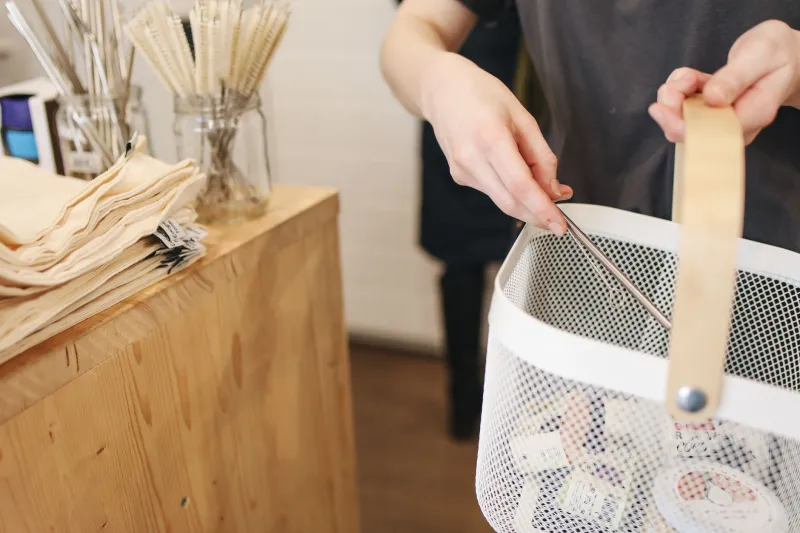
There's something deeply satisfying about scooping your own oats into a cloth bag, handing over your tare weight slip, and walking out of the co-op feeling like you've personally saved a sea turtle. Bulk shopping has become one of the most visible symbols of conscious consumption in America — a ritual that signals you're serious about waste reduction, not just dabbling in it.
But here's the uncomfortable question nobody at the bulk aisle wants to ask: Is it actually working?
Not in a feel-good sense. In a real, measurable, dollars-and-carbon sense. Because when you start pulling the curtain back on the economics and environmental math of bulk purchasing, the picture gets a lot more complicated than a jar of lentils and a clear conscience.
The Convenience Tax You're Probably Paying
Let's start with the most overlooked cost of bulk shopping: getting there.
In most American cities and suburbs, stores with robust bulk sections — your Whole Foods, local co-ops, specialty natural grocers — aren't exactly on every corner. For a lot of shoppers, hitting the bulk aisle means a separate trip, or at least a meaningful detour from their usual grocery run.
That extra mileage adds up fast. A 10-mile round trip in an average American car produces roughly 4 pounds of CO2. Do that twice a month for your bulk staples, and you've burned through nearly 100 pounds of emissions annually — just to avoid the packaging on your quinoa. Depending on what you're buying and how much packaging you're actually displacing, that math can flip on you in a hurry.
If you're lucky enough to live near a store with a solid bulk section, this is less of an issue. But for the majority of US shoppers, especially those outside dense urban cores, the transportation cost of bulk shopping is a real variable that almost nobody factors in.
Spoilage: The Silent Budget Killer
Here's another number that rarely makes it into the bulk-bin enthusiasm: food waste rates.
Conventional packaged goods are designed for shelf stability. The portion sizes, the sealed packaging, the preservatives — all of it is engineered to minimize spoilage between purchase and consumption. Bulk goods, by contrast, put that responsibility entirely on you.
Buy a pound of whole wheat flour from the bulk bin because it's cheaper per ounce? Great. But if you only bake occasionally and that flour goes stale, gets weevils, or just gets forgotten in the back of your pantry, the effective cost per used ounce just skyrocketed. Studies on household food waste consistently show that Americans throw away somewhere between 30 and 40 percent of the food they buy. Bulk purchasing, without honest self-assessment of your actual consumption habits, can quietly push that number higher.
The environmental cost of wasted food is enormous — food production accounts for roughly a quarter of global greenhouse gas emissions, and food rotting in landfills generates methane. Buying in bulk and throwing some of it away isn't a net zero-waste win. It might actually be a net loss.
The Container Equation Nobody Wants to Do
Reusable containers are a point of pride in zero-waste circles, and for good reason — they're genuinely better than single-use packaging over time. But "over time" is doing a lot of work in that sentence.
A quality glass jar has a meaningful carbon footprint from manufacturing and transport. So does a stainless steel container. The environmental break-even point — the number of uses required before the reusable option outperforms the disposable one — varies widely depending on the material, how you wash it, and what you're comparing it to.
For glass versus a thin plastic bag, the break-even can happen fairly quickly. For glass versus a lightweight cardboard box with a minimal plastic liner, it takes considerably longer. And if you're hand-washing your jars in hot water every week, you're adding energy and water costs that further shift the calculation.
None of this means reusable containers are bad. They're not. But the framing of "reusable = automatically green" papers over a more nuanced reality that conscious shoppers deserve to actually understand.
So When Does Bulk Shopping Actually Win?
Glad you asked, because the answer isn't "never" — it's "when the conditions are right."
Bulk purchasing genuinely delivers on its environmental and economic promise when:
- You're already at the store for other shopping. No extra trip, no additional emissions. The bulk aisle becomes a pure packaging displacement win.
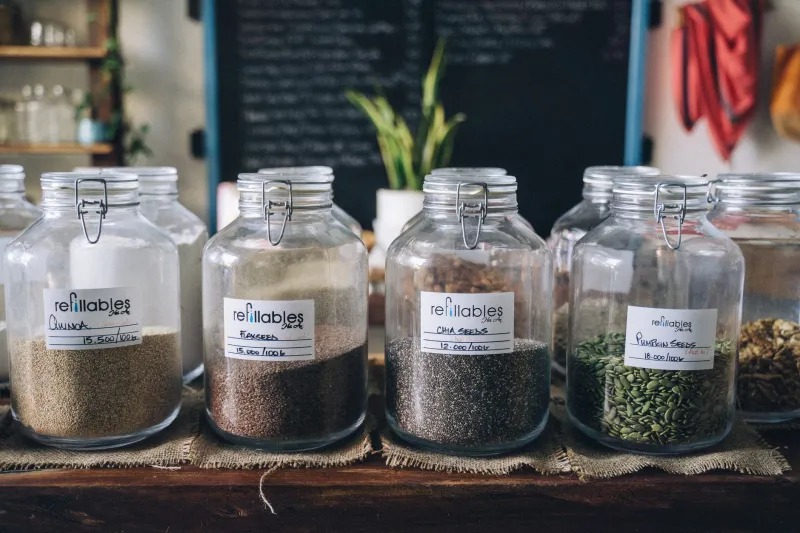
- You're buying shelf-stable staples you use consistently. Oats, rice, dried beans, nuts, spices you cook with weekly — these are low-spoilage, high-usage items where bulk genuinely saves money and waste.
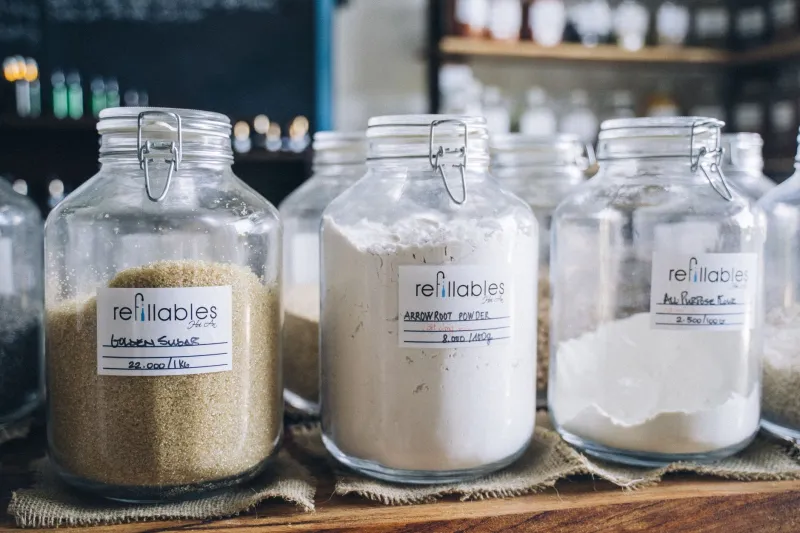
- The price per unit is meaningfully lower. This sounds obvious, but it's worth actually checking. Some bulk bins are priced at or above the packaged equivalent, especially at premium retailers. Always compare before assuming.
- Your containers are already amortized. If you've been using the same mason jars for two years, they've long since earned their environmental keep.
- You live close to a store with a good selection. Distance is a real variable. A two-mile bike ride to the co-op is a very different equation than a 15-mile drive.
A Simple Framework to Actually Run the Numbers
Instead of defaulting to bulk as a blanket virtue, try running this quick gut-check before your next shopping trip:
- Transportation cost: Am I making a special trip, or is this store already in my routine? If it's a detour, estimate the extra miles and factor in your car's fuel efficiency.
- Spoilage likelihood: Be honest. Will I realistically use all of this before it goes bad? If you're a solo household buying a pound of specialty grain on a whim, the answer might be no.
- True unit price comparison: Pull up the packaged alternative on your phone if you have to. Check the price per ounce. Bulk isn't always cheaper at every store.
- Container lifecycle: How long have you had your containers? Are they being used regularly enough to justify their production footprint?
- Packaging impact of the alternative: What would you actually be replacing? A small plastic bag is different from a glass jar, which is different from a tetra pak. The packaging you're avoiding matters.
The Bigger Picture
None of this is an argument against bulk shopping. Done thoughtfully, it's genuinely one of the better consumer choices available to us. But the zero-waste movement has a tendency to celebrate the aesthetic of conscious consumption — the pretty jars, the linen bags, the virtuous scooping — without always doing the harder work of verifying the impact.
Real eco-smart shopping means being willing to interrogate even the practices that feel good. It means asking whether your choices are actually reducing harm, or just shifting it somewhere less visible. And it means building habits based on honest math rather than identity signaling.
The bulk bin can be a powerful tool. Just make sure you're actually using it as one.