Not So Clean After All: The Hidden Costs Lurking Behind Your Plastic-Free Swaps
Let's be honest: there's a certain satisfaction that comes with tossing a bamboo toothbrush into your bathroom caddy or grabbing a plant-based bag at the grocery checkout. It feels like progress. And in a lot of ways, the instinct behind it is exactly right — conventional plastics are a genuine environmental disaster, from the fossil fuels that birth them to the centuries they spend haunting our landfills and oceans.
But here's the uncomfortable question nobody on the packaging wants you to ask: what if some of these swaps are less of a solution and more of a relocation? What if we're not eliminating the problem so much as moving it somewhere we can't see it?
Spoiler: in a lot of cases, we are. And understanding that isn't a reason to give up — it's a reason to shop smarter.
The Bamboo Boom and Its Blind Spots
Bamboo has become the poster child of sustainable materials, and there's real logic to its appeal. It grows incredibly fast, requires minimal water, and doesn't need pesticides to thrive. Compared to timber, it's practically a miracle crop. But the bamboo products flooding U.S. shelves — cutting boards, utensils, straws, toothbrushes — often tell a more complicated story once you trace them back to the source.
The vast majority of commercial bamboo comes from China, where it's harvested and processed before making a very long journey to American consumers. That supply chain carries a significant carbon footprint that rarely shows up in the marketing copy. More critically, bamboo products are frequently bonded with formaldehyde-based resins or blended with melamine to improve durability. That's not exactly what you signed up for when you paid a premium for the "natural" option.
Then there's the end-of-life problem. Bamboo marketed as compostable often requires industrial composting conditions to break down properly — conditions that most American municipalities simply don't offer. Toss it in your backyard bin or, worse, the trash, and it's not behaving much better than the plastic it replaced.
Bioplastics: The Fine Print Is Doing a Lot of Work
Bioplastics — materials made from corn starch, sugarcane, cassava, or other plant sources — have been aggressively positioned as the future of packaging. Whole Foods carries them. Your local deli probably uses them. They look like plastic, feel like plastic, and in many cases, act like plastic. Which is precisely the problem.
The term "bioplastic" is an umbrella covering a wildly diverse range of materials with very different environmental profiles. Some are genuinely biodegradable under the right conditions. Others, like PLA (polylactic acid), are technically compostable but only at commercial facilities operating above 140°F — a standard that covers fewer than 150 facilities across the entire United States. When PLA ends up in a landfill, which it almost always does, it degrades at roughly the same rate as conventional plastic. And if it gets into a recycling stream, it can actually contaminate the batch.
The agricultural side of the equation adds more complexity. Corn-based bioplastics often rely on monoculture farming propped up by synthetic fertilizers and herbicides. The land use, water demand, and chemical runoff tied to these crops are real environmental costs — they're just happening in Iowa instead of an oil field.
Paper and Cardboard: The "Obviously Better" Option That Isn't
When retailers started replacing plastic bags and clamshell containers with paper alternatives, it was widely celebrated as a no-brainer. Paper is recyclable. It biodegrades. It comes from trees, which are renewable. What's the catch?
A few, actually. Paper production is extremely energy- and water-intensive. Manufacturing a single paper bag requires roughly four times the energy of producing a plastic one. And because paper is heavier, it takes more fuel to ship — meaning that innocent-looking kraft paper bag at your local farmer's market arrived with a larger carbon footprint per unit than the plastic alternative it displaced.
Recycling rates for paper are better than plastic in the U.S., which is genuinely meaningful. But paper can only be recycled a limited number of times before the fibers degrade, and food-contaminated paper — think greasy pizza boxes or soiled deli wrap — is often unrecyclable regardless of what the bin says.
What About Reusables? (Yes, There's a Catch Here Too)
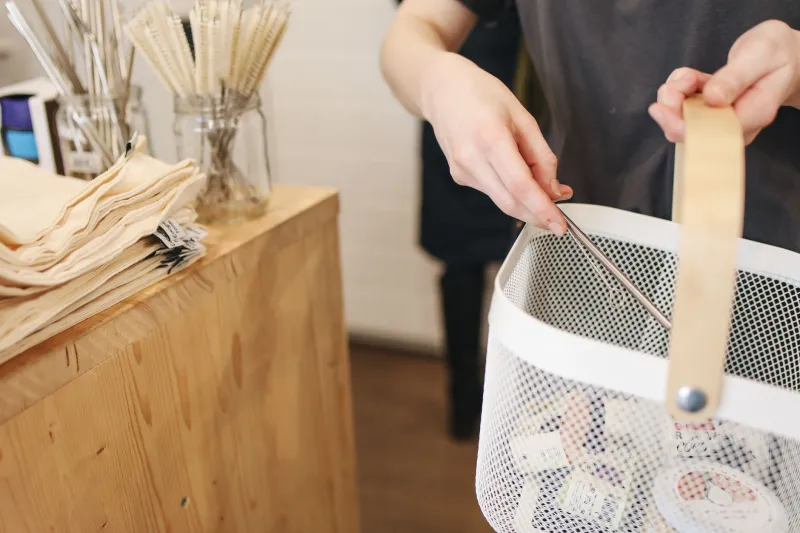
Reusable bags, bottles, and containers are widely considered the gold standard of the plastic-swap movement, and they absolutely can be — with a caveat about break-even points that most people overlook.
A cotton tote bag needs to be used somewhere between 50 and 150 times to offset the environmental cost of its production, depending on which study you consult. Organic cotton is even more resource-intensive to grow, so those bags need even more uses to come out ahead. A stainless steel water bottle is a fantastic swap for single-use plastic, but only if you actually use it consistently for years — not if it ends up forgotten at the back of a cabinet after six months.
The math isn't discouraging — it's clarifying. Reusables win, but only when they're actually used.
How to Make Swaps That Actually Count
None of this means you should throw up your hands and go back to plastic straws. It means your purchasing decisions deserve more than a quick scan of the label. Here's a framework that holds up:
Ask about end-of-life first. Before you buy, find out how the product is actually supposed to be disposed of — and whether your area supports that. Check Earth911.com to see what composting or recycling options exist near you.
Prioritize reduction over substitution. The most sustainable version of a product is often the one you don't buy. Before swapping, ask whether you need the item at all.
Favor durability. A product you'll use for five years almost always beats a "sustainable" disposable, regardless of what the disposable is made from.
Look past the material to the supply chain. Where was it made? How far did it travel? What certifications back up the claims? Certifications like B Corp, Cradle to Cradle, and Fair Trade aren't perfect, but they signal that someone has done more homework than a marketing team.
Embrace imperfection. You won't always find the objectively optimal choice, and that's okay. A good-enough swap you'll actually stick with beats a perfect solution you abandon.
The Bigger Picture
The plastic crisis is real, and so is the consumer instinct to do something about it. But the market has gotten very good at monetizing that instinct without necessarily solving the underlying problem. When a company swaps plastic packaging for something that looks greener but ends up in the same landfill, that's not progress — it's a rebrand.
True progress looks like demanding better infrastructure for composting and recycling, supporting companies with genuinely circular supply chains, and being willing to sit with the complexity of these choices rather than outsourcing your conscience to a label.
Shop smarter. That means asking harder questions — even when the answers are inconvenient.