Paying Green to Go Green: When Eco Premiums Are Worth It (And When You're Just Funding a Marketing Budget)
You're standing in the cleaning aisle at Target, holding two bottles of all-purpose spray. One is $2.99. The other — same size, similar ingredients, but with a leaf logo and the word "plant-based" on the label — is $8.49. Your brain does the math. Your conscience does the guilt trip. You grab the green one.
But here's the question nobody's really asking out loud: Did that $5.50 difference actually help the planet, or did it mostly help a brand's profit margin?
At EcoConsum, we're all for putting your money where your values are. But conscious consumption means being skeptical — even of the products that claim to share your values. So let's dig into the pricing psychology behind the eco-friendly market, figure out where premiums are genuinely justified, and give you a framework for making smarter calls without feeling like you need a chemistry degree.
Why Eco Products Cost More: The Legitimate Reasons
First, let's be fair. Some of the price gap between conventional and sustainable products is real and defensible.
Ingredient sourcing matters. Certified organic botanicals, sustainably harvested plant extracts, and non-GMO inputs genuinely cost more to source than petroleum-derived synthetics. When a company pays fair-trade prices to farmers in Ecuador for essential oils, that shows up in the sticker price — and it should.
Smaller production runs drive up unit costs. Most indie eco brands aren't operating at Procter & Gamble scale. Lower volume means less negotiating power with suppliers, higher per-unit manufacturing costs, and thinner margins to absorb overhead. A small-batch natural deodorant brand in Portland is playing a fundamentally different economic game than Degree.
Certifications aren't free. USDA Organic, B Corp, Leaping Bunny, Fair Trade — these third-party validations cost money to obtain and maintain. That's a cost that gets passed along, and honestly, it's one worth paying for because it means someone outside the company verified the claims.
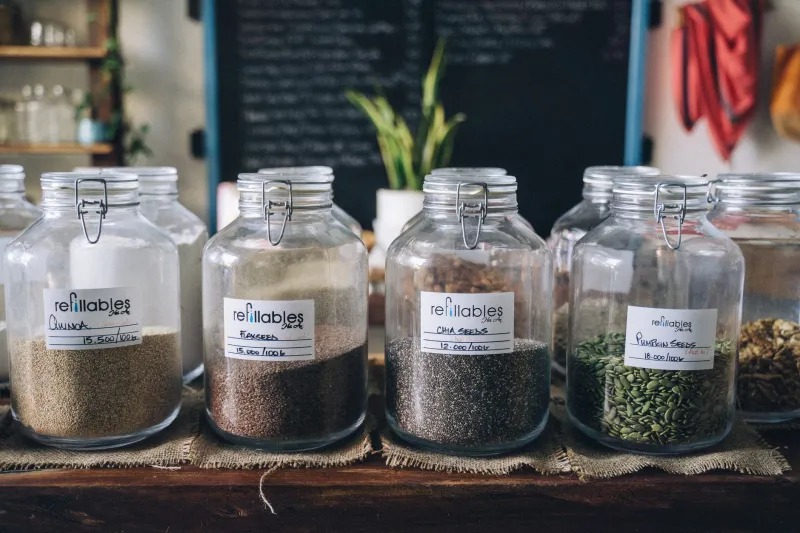
Packaging innovation is expensive upfront. Compostable mailers, refillable glass containers, and dissolvable tablets all require R&D investment that conventional plastic packaging simply doesn't. Early adopters of these formats subsidize the innovation curve.
So yes, some premium is real. The problem is that the market has figured out that slapping a green label on almost anything unlocks a higher price point — whether or not the product earns it.
Where the Markup Gets Murky
Here's where it gets uncomfortable. A 2023 analysis by the NYU Stern Center for Sustainable Business found that products marketed as sustainable commanded an average price premium of 28% over conventional alternatives. That's the average. In some categories, it's far higher.
Take personal care. Walk through any Whole Foods or Ulta and you'll find "clean" moisturizers priced at $45 next to conventional formulas doing roughly the same job for $12. The word "clean" has no regulated definition in the US beauty industry. None. The FDA doesn't require brands to prove a product is safer, greener, or more sustainable just because they call it that. So when a company charges triple for "clean" skincare, you're often paying for aesthetic packaging, influencer partnerships, and a marketing narrative — not measurable environmental benefit.
Food is another category worth scrutinizing. "Natural" on a food label? Also not regulated by the FDA in any meaningful way. Some organic certifications are rock-solid; others are gamed through loopholes. A $6 bag of "sustainably sourced" granola from a large conglomerate might deliver less actual sustainability impact than a $4 bag from a regional cooperative using regenerative grain — you'd just never know from the packaging alone.
And cleaning products? This is probably the most egregious category. Many conventional products have quietly reformulated to remove the most harmful ingredients. Meanwhile, some "eco" brands are charging 3x for diluted formulas that perform worse, simply because the bottle is brown and has a fern on it.
A Category-by-Category Reality Check
Cleaning Supplies: Look for EPA Safer Choice certification — it's free to verify online and means the formula has actually been vetted. Concentrate formats and refill systems (like Blueland or Branch Basics) offer genuine environmental and cost benefits. Skip the premium if the only eco credential is the color of the bottle.
Personal Care: Fragrance-free, minimal-ingredient products from brands with Leaping Bunny or EWG Verified status tend to deliver real value. But "natural," "clean," and "green" without third-party backing? Those are marketing words, not environmental commitments. Price alone tells you nothing here.
Food: USDA Organic is worth paying for on the Environmental Working Group's Dirty Dozen list (strawberries, spinach, peppers — produce with the highest pesticide loads). For the Clean Fifteen? Conventional is often fine. Local and seasonal from a farmers market can outperform expensive "sustainable" packaged foods on actual environmental metrics, even without a certification.
How to Calculate True Value-for-Impact
Here's a simple mental framework we use at EcoConsum before paying a green premium:
1. Ask: What's the specific claim? Vague words like "natural," "eco," or "conscious" are red flags. Specific claims — "made with 95% post-consumer recycled content" or "certified carbon neutral by Climate Neutral" — are starting points for real evaluation.
2. Verify the certification. Third-party certifications with public databases (B Corp, Fair Trade USA, USDA Organic, EPA Safer Choice) are verifiable. If a brand invented its own certification logo, that's not a certification — that's a logo.
3. Compare cost-per-use, not cost-per-unit. A $20 concentrated cleaner that makes 64 bottles often beats a $6 ready-to-use spray on both price and environmental footprint. Do the division before you decide.
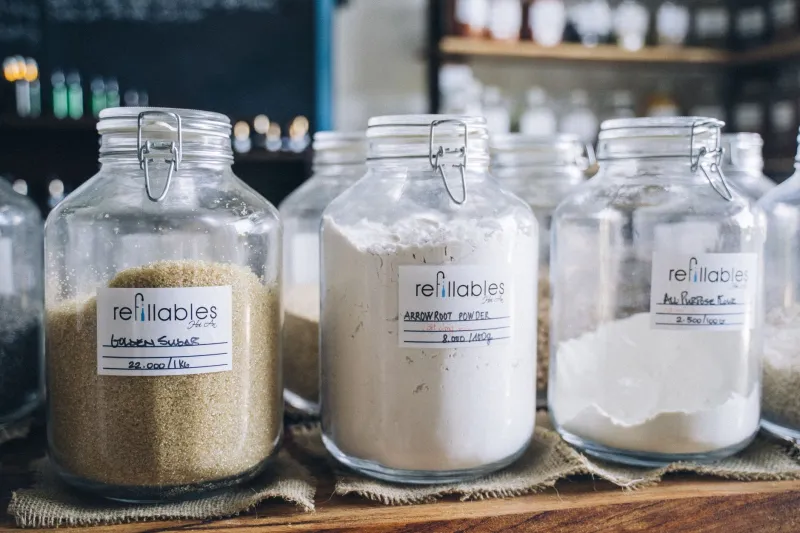
4. Consider the full lifecycle. A product in a refillable glass jar that lasts twice as long might justify double the upfront price. One in single-use plastic with a leaf logo? The math doesn't pencil out for your wallet or the planet.
5. Research the brand, not just the product. Who owns this company? Where is it manufactured? What's their supply chain transparency like? A two-minute Google search can tell you whether a brand's values run deeper than its label design.
The Bottom Line
Being an eco-conscious consumer doesn't mean paying more for everything green. It means paying strategically — investing in premiums that translate into genuine environmental impact, and refusing to subsidize greenwashing with your grocery budget.
The brands doing the real work — reformulating for safety, paying fair wages, building closed-loop packaging systems — deserve your dollars. The ones selling you a feeling of sustainability at a 300% markup? They deserve a little more skepticism.
Shop smarter. The planet needs your money going to the right places.