Your Suburban Lawn Is Running a Gas Guzzler You Never Registered
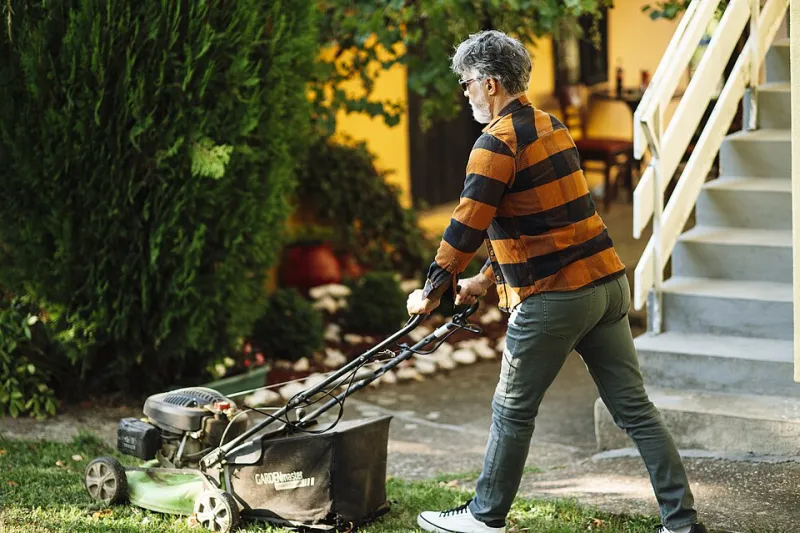
Photo: Shixart1985, CC BY 2.0, via Wikimedia Commons
Here's a fun fact to drop at your next neighborhood barbecue: running a gas-powered leaf blower for one hour can emit as much smog-forming pollution as a 1,100-mile drive in a modern car. Read that again. Your Saturday morning yard cleanup is, emissions-wise, a road trip to Chicago.
We spend a lot of time on this site talking about what's in the shopping cart. But for the roughly 40 million American households with a lawn, some of the biggest environmental impacts happen outside — literally, right outside the back door.
The Two-Stroke Problem Hiding in Your Garage
Gas mowers, trimmers, and blowers mostly run on small two-stroke or four-stroke engines that were never held to the same emissions standards as cars. Two-stroke engines burn an oil-gas mixture and spit out a alarming share of it unburned. The EPA estimates that gas-powered lawn and garden equipment accounts for a meaningful slice of volatile organic compound emissions — and in summer, when ozone alerts peak, that's exactly when everyone's mowing.
Then there's the spillage. The EPA has estimated that Americans spill more gasoline refilling lawn equipment each year than the Exxon Valdez dumped. Small engine, big mess.
The Thirsty Green Machine
Even if your mower ran on rainbows, the lawn itself is a resource hog. Lawns are the single largest irrigated "crop" in the US by acreage — around 40 million acres of it — and outdoor watering accounts for a huge share of household water use, especially in the Southwest, where we're somehow growing Kentucky bluegrass in the desert.
Add synthetic fertilizers (energy-intensive to produce, prone to running off into waterways and feeding algal blooms) and the picture gets worse. The perfect lawn isn't just a fossil fuel problem. It's a water problem, a chemical problem, and honestly, a cultural one.
So What Are the Actual Options?
You don't have to rip up your yard tomorrow. But here's the ladder, from easy wins to full reimagining:
1. Go electric. Battery-powered mowers, blowers, and trimmers have come a long way. They're quieter, produce zero tailpipe emissions, and eliminate the gas can entirely. Many states — California most famously — are phasing out the sale of new gas-powered small engines anyway, so you'll be ahead of the curve.
2. Ditch the blower. A rake works. It genuinely does. It's also free exercise, which is more than we can say for the $300 blower.
3. Mow less. Letting your lawn grow a bit taller shades out weeds, reduces water evaporation, and means fewer mowing passes. Set the blade higher; your grass will thank you.
4. Rethink the grass itself. Native plant gardens, clover lawns, xeriscaping, or simply shrinking the turf footprint can cut water and maintenance dramatically. Bonus: pollinators actually show up.
5. Kill the fertilizer habit. If you compost, your lawn needs far less of the bottled stuff. Grasscycling — leaving clippings where they fall — returns nutrients to the soil for free.
The HOA Elephant in the Room
Look, we get it. If your homeowners association has opinions about your lawn height, individual heroics get complicated. That's exactly why this is a consumer advocacy issue and not just a personal choice one. Cities from Las Vegas to Minneapolis are rethinking turf mandates, and homeowners pushing for native-landscaping ordinances are winning. The perfectly uniform green carpet is a mid-century aesthetic, not a law of nature.
The Bottom Line
Nobody's saying you have to live in a dirt lot. But if you're an environmentally conscious shopper who sweats the packaging on your groceries while running a gas blower for an hour every weekend, the math is off. The greenest yard isn't the one that looks like a golf course — it's the one that barely needs you to show up with a machine at all.
Start with the mower. Work your way down to the grass. Your neighbors will come around — probably right after their electric mower arrives, too.