Miles, Emissions, and Hard Truths: How Your Daily Commute Is Really Scoring on the Planet
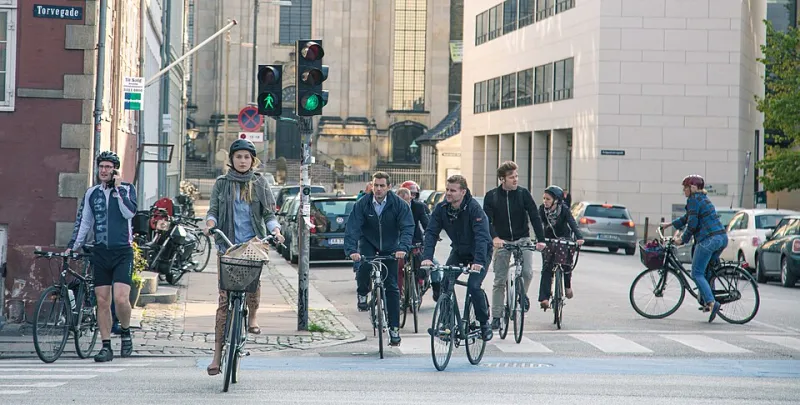
Photo: Tony Webster from Portland, Oregon, United States, CC BY 2.0, via Wikimedia Commons
Commuting is America's most universal daily ritual and, for most people, its most environmentally consequential habit. Transportation accounts for the largest share of US greenhouse gas emissions — around 28% of the total, according to the EPA — and personal vehicles are the single biggest contributor within that category. Yet the conversation about "greener commuting" tends to flatten into oversimplified takes: hybrids good, cars bad, bikes perfect.
Reality, as usual, is messier and more interesting.
The Lifecycle Problem Nobody Wants to Talk About
Here's the uncomfortable truth that tends to get buried in feel-good EV marketing: manufacturing a vehicle — any vehicle — is emissions-intensive before it ever turns a wheel. A conventional gasoline car generates roughly 6 to 35 metric tons of CO₂ equivalent during production, depending on size. A battery electric vehicle (BEV), thanks to the energy-intensive process of mining and processing lithium, cobalt, and nickel, can carry a manufacturing carbon debt of 8 to 20 metric tons before it leaves the factory floor.
For a hybrid, you're splitting the difference — but you're also carrying two powertrains, which adds manufacturing complexity and materials cost.
This doesn't mean EVs are worse. Over a full lifespan, they almost always win on total emissions, especially as the US grid gets cleaner. But it does mean that buying a brand new hybrid to replace a functional 8-year-old sedan — because you want to feel greener — might not actually pencil out environmentally for several years. The greenest car, in many scenarios, is still the one you already own.
So What Does Win?
Let's run through the realistic options most US commuters actually have.
Public Transit: The Underrated Champion
Bus and rail get unfairly dismissed in car-centric American culture, but the emissions math is hard to argue with. The American Public Transportation Association estimates that public transit produces roughly 45% lower CO₂ emissions per passenger mile than private vehicles — and that figure improves as ridership increases, since the infrastructure's carbon cost gets shared across more riders.
Heavy rail (subway systems, commuter trains) performs especially well. Amtrak's Northeast Corridor, powered substantially by electricity, clocks in at among the lowest per-mile emissions of any transportation mode in the country.
The catch? Public transit in the US is a geographic lottery. If you're in New York, Chicago, Boston, or DC, you have real options. If you're in suburban Phoenix, Houston, or most of rural America, "just take the bus" isn't practical advice — it's a fantasy. Transit advocacy matters here. How your city spends its transportation dollars is an environmental issue, and voting and showing up to local planning meetings is part of the eco-conscious commuter's toolkit.
E-Bikes: Punching Way Above Their Weight
If there's a dark horse in this conversation, it's the e-bike. Studies from the European Cyclists' Federation (whose methodology translates reasonably well to US contexts) have found that e-bikes emit roughly 2 to 5 grams of CO₂ per passenger kilometer — compared to 150 to 200 grams for the average American car. Even accounting for battery manufacturing and the electricity used for charging, e-bikes absolutely demolish cars on emissions per mile.
For US commuters within a 5 to 15 mile radius of their workplace — which covers a substantial portion of suburban America — e-bikes are a genuinely transformative option. The barrier is infrastructure: many American roads are actively hostile to cyclists. But cities including Minneapolis, Denver, Portland, and Seattle have made meaningful investments in protected bike lanes, and federal infrastructure funding is slowly expanding that network.
The upfront cost of a quality e-bike ($1,500 to $4,000) also compares favorably to car ownership costs that average over $10,000 annually when you factor in insurance, fuel, maintenance, and depreciation.
Carpooling: The Obvious Answer We Keep Ignoring
Carpooling is almost embarrassingly effective, and almost embarrassingly underused. Adding one passenger to a solo commute cuts per-person emissions roughly in half. Two additional passengers, and you're approaching public transit efficiency levels in a private vehicle.
Apps like Waze Carpool, Scoop, and employer-based rideshare programs have made coordination easier than ever. Yet solo-occupancy vehicle rates in the US have barely budged in decades. Cultural attachment to the private commute — the podcast time, the decompression, the sense of autonomy — is real, and dismissing it won't change behavior. But framing carpooling as a financial decision (splitting gas and parking costs) sometimes opens doors that environmental framing doesn't.
The Hybrid Reality Check
Hybrids occupy a strange middle ground in the environmental hierarchy. They're meaningfully better than conventional gas cars on operational emissions — especially in stop-and-go city driving where regenerative braking shines. But they're not as transformative as many owners believe.
A standard Toyota Prius, the cultural avatar of eco-commuting, gets roughly 50 to 56 mpg combined. That's excellent. But a compact conventional car getting 38 to 40 mpg, driven conservatively, isn't catastrophically behind — especially when you factor in the Prius's more complex manufacturing footprint.
The bigger issue is that many Americans buy hybrids and then... drive more. The psychological effect of feeling virtuous about your vehicle can lead to increased mileage, partially or fully offsetting the efficiency gains. This phenomenon — called the "rebound effect" — is well-documented in transportation research and worth an honest self-assessment.
Remote Work: The Commute You Don't Take
The most undervalued eco-commuting option is the one with zero miles: not commuting at all. A fully remote workday eliminates transportation emissions entirely (for that day), and research from MIT found that pandemic-era reductions in commuting were among the fastest and largest carbon reductions the US transportation sector has ever seen.
Hybrid work schedules — even two or three remote days per week — compound meaningfully over a year. Someone eliminating three commute days weekly from a 20-mile round trip in an average car avoids roughly 1.5 to 2 metric tons of CO₂ annually. That's comparable to the annual emissions savings of switching from a conventional car to a hybrid.
If you have the option to negotiate remote or hybrid work and haven't framed it as an environmental benefit, you're leaving one of the easiest wins on the table.
Building Your Personal Commute Score
No single commuting choice works for everyone, and the most honest thing we can say at EcoConsum is that context is everything. A few questions worth sitting with:
- What's your grid? Driving an EV in West Virginia (heavily coal-powered) carries more emissions than driving one in Washington state (heavily hydro). Check your utility's energy mix.
- How far are you actually going? Distance changes everything. E-bikes and transit shine for short-to-medium distances. Long-haul commutes need different solutions.
- What's your replacement timeline? If you're keeping your current car for five more years, optimizing how you drive it (trip consolidation, smoother acceleration, proper tire inflation) matters more right now than fantasizing about your next vehicle.
- What infrastructure exists around you? Advocate for what's missing. Transit funding, bike infrastructure, and employer commuter benefits are all policy levers that compound across thousands of commuters.
The commuting choices that matter most aren't always the ones that feel the most dramatic. Sometimes the greenest commute is the one you share, the one you shorten, or the one you skip entirely.