Stop Buying Clothes, Start Building a Wardrobe: The Math That Will Change How You Shop Forever
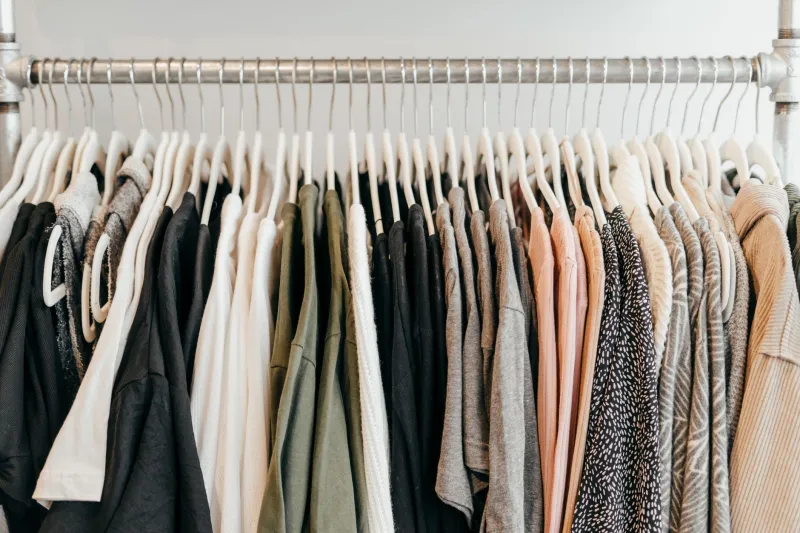
Let's be honest. Most of us have bought a shirt, worn it twice, watched it pill and fade in the wash, and quietly exiled it to the back of the closet — or worse, the trash. Multiply that by a few dozen impulse purchases a year, and you've got a wardrobe that's both overflowing and somehow still offering nothing to wear on a Monday morning.
Here's the thing nobody in the fast fashion industry wants you to figure out: cheap clothes are extraordinarily expensive. And expensive clothes, bought thoughtfully, can be one of the most cost-effective and planet-friendly decisions you make all year.
The Cost-Per-Wear Equation Nobody Taught You
Cost-per-wear is simple arithmetic with surprisingly radical implications. You take what you paid for a garment and divide it by how many times you actually wear it. That's your real price tag.
A $20 T-shirt that shrinks after three washes and gets worn maybe twice before it's unwearable? That's $10 per wear. A $120 well-constructed merino wool crewneck that you reach for two or three times a week for five years? Run that math — at roughly 200 wears, you're looking at $0.60 per wear.
Suddenly, the "cheap" shirt is seventeen times more expensive than the quality one. That's not a rounding error. That's a fundamentally broken way of thinking about value.
And it's not just your wallet absorbing the damage.
What Happens to That $20 Shirt After Two Wears
The American clothing lifecycle has become shockingly short. According to the EPA, Americans throw away roughly 11.3 million tons of textiles every year — most of it clothing. A significant portion of that waste is made up of garments that barely got used before they fell apart or fell out of style.
Fast fashion isn't designed to last. That's not an accident — it's a business model. Brands that sell on volume need you to come back next season, next month, sometimes next week. Durability is, quite literally, bad for their bottom line.
So fabrics get thinner. Seam allowances shrink. Zippers are sourced from the cheapest possible suppliers. Natural fibers get blended with cheap synthetics to cut costs, which simultaneously reduces breathability, longevity, and — here's the environmental gut punch — makes the garment nearly impossible to recycle. Blended fabrics are notoriously difficult to separate and process at end-of-life, so they almost always end up in a landfill.
When you buy a shirt that lasts two wears, you're not just losing money. You're participating in a system that burns through resources — water, energy, labor, land — to produce something with a lifespan shorter than a houseplant.
Quality Construction: What to Actually Look For
Building what some sustainable fashion advocates call an "immortal closet" starts with knowing what separates a garment built to last from one engineered to fall apart.
Check the seam allowance. Flip a garment inside out. Is there a generous amount of fabric beyond the stitching? Wider seam allowances mean the garment can be let out, repaired, or re-sewn without falling apart. Tiny seam allowances are a telltale sign of cost-cutting.
Look at the stitching density. More stitches per inch generally means stronger seams. Loose, widely spaced stitching unravels faster under regular wear and washing.
Feel the fabric weight. Heavier doesn't always mean better, but suspiciously lightweight fabric — especially in something marketed as a staple piece — usually signals low fiber content or heavy synthetic blending.
Ask about natural fibers. 100% cotton, linen, wool, and silk all age differently than synthetics, but they're typically more repairable, more breathable, and more biodegradable. A well-cared-for wool sweater can genuinely last decades.
Check if the brand offers repairs. A growing number of quality brands — Patagonia being the most famous example — have formal repair programs. That's a company betting on their product's longevity. Take them up on it.
The Repair Economy Is Making a Comeback
One of the quieter casualties of fast fashion was the neighborhood tailor. Why pay $15 to fix a zipper on a $25 jacket? You wouldn't — and that was entirely the point.
But that calculus flips completely when your jacket cost $200 and has another decade of life in it. Suddenly, a $20 repair isn't a questionable expense; it's a no-brainer investment.
Across the US, independent tailors, cobbler shops, and community repair cafés are experiencing a genuine renaissance. Cities like Portland, Austin, and Brooklyn have seen real growth in small-batch alteration studios catering specifically to people who want to extend the life of quality pieces. Online platforms like Yelp and even dedicated apps now make it easier than ever to find local repair services.
Learning basic repairs yourself is also worth considering. A YouTube tutorial on replacing a button or reinforcing a worn cuff takes about 20 minutes and can add years to a garment's life. That's not a small thing.
Building the Immortal Closet Without Going Broke
Here's where people get tripped up: "buy fewer, better things" sounds great until you're staring at a $180 price tag on a flannel shirt and your rent is due.
The shift doesn't have to happen all at once. A few practical entry points:
Start with secondhand. Thrift stores, consignment shops, and platforms like ThredUp or Poshmark are full of quality garments from brands that made things well — often at a fraction of their original price. You can absolutely build a high-quality wardrobe without paying full retail for any of it.
Identify your actual cost-per-wear anchors. What do you wear the most? For most people, it's a handful of basics — a go-to pair of jeans, a few reliable tops, a jacket they reach for constantly. Those are the pieces worth investing in first.
Adopt a one-in, one-out rule. Before buying anything new, ask what it replaces. This slows the accumulation cycle and forces more intentional purchasing.
Resist trend-driven buying. Trends are fast fashion's primary weapon. A garment tied to a specific moment in time has a built-in expiration date. Classic cuts and neutral palettes don't.
The Radical Act of Wearing Something Out
There's something almost countercultural about owning a jacket you've worn for eight years. In a consumer landscape engineered around novelty, keeping and caring for the same things season after season is a quiet form of resistance.
It's also, increasingly, a flex. A well-worn pair of quality boots or a perfectly broken-in canvas coat carries a story that a brand-new fast fashion haul simply can't replicate. Wear is character when the original construction was worth preserving.
The immortal closet isn't about minimalism as an aesthetic or spending more money to feel virtuous. It's about recognizing that your purchasing decisions have a real cost — to your bank account, to the workers making the clothes, and to a planet that's running low on patience for disposable everything.
Buy less. Buy better. Wear it until it's done. Then repair it and wear it some more.
That's not a sacrifice. That's just smart.