Your Monstera Has a Peat Problem: The Bog-Buried Cost of Potting Soil
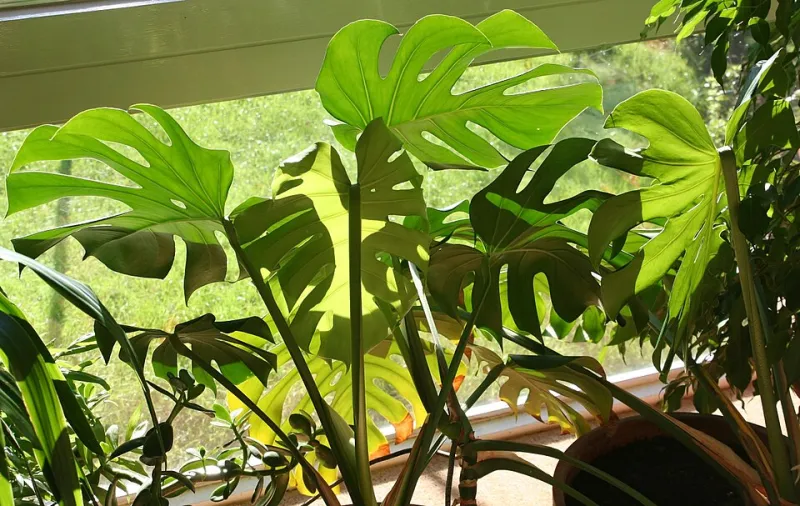
Photo: Andy / Andrew Fogg from near Cambridge, UK, CC BY 2.0, via Wikimedia Commons
The bag under your sink has a backstory
Your monstera is thriving. Two new fenestrated leaves since spring, a moss pole doing its job, an Instagram post you're a little proud of. Somewhere down the supply chain, though, there's a drained bog in Canada or the Baltics and a piece of equipment that looks like a giant shop vac.
Most bagged potting soil in the US is built on sphagnum peat moss — that fluffy, spongy, water-holding fiber that makes up a huge share of the mix. It's a fantastic growing medium. It's also a fossil resource that nobody thinks of as a fossil resource.
How long it takes to make a bog
Peat forms when sphagnum moss and other bog plants die in waterlogged, oxygen-poor, acidic conditions and fail to fully decompose. Layer by layer it accumulates — slowly. A typical rate is on the order of a millimeter a year. A meter of peat, roughly what a harvester removes in one pass, represents something like a thousand years of accumulation.
Peatlands cover roughly three percent of the planet's land surface. They hold an estimated 30 percent of the world's soil carbon, which is on the order of twice the carbon stored in all the world's forests combined. That's the whole reason bogs matter in a climate conversation: they're a vault, not a lawn.
When a bog is drained and harvested, two things happen. First, the stored carbon starts oxidizing into the atmosphere — the material stops being a vault and starts being an emission. Second, drained peat is extremely flammable, and drained peatland fires are beastly things that smolder underground, are hard to extinguish, and release a lot of carbon in a hurry.
What horticulture actually consumes
Here's the nuance that honest reporting has to include: globally, most extracted peat historically goes to energy and agriculture in Europe, not to your bag of indoor potting mix. Horticulture is a meaningful slice, not the entire pie. But in the US, retail soil is where consumers touch peat directly — which is why the bag matters culturally and politically, even if it's not the only problem.
And the industry is reacting, unevenly. The UK has been moving toward restricting peat sales in retail horticulture, Ireland has been winding down commercial extraction, and major European retailers have pledged to go peat-free. The US, characteristically, has no federal ban and no labeling requirement. Which brings us to the confusing part.
"Peat-free" is not a defined term here
In the US, if a bag says “peat-free,” it means whatever the manufacturer decided it means. There's no federal standard and no enforcement body checking.
Some practical traps:
- “Organic” does not mean peat-free. It refers to inputs, not to whether the mix contains peat.
- Ingredient lists are vague. Look for “sphagnum peat moss,” “peat moss,” or just “peat” on the back panel. Some mixes use “sedge peat” or other bog-derived material and still market themselves as alternative products.
- “Coco coir” blends often still contain peat. Read the ratios, not the front of the bag.
- Seed starter mixes are among the peatiest products on the shelf. Check before you assume.
If a brand publishes a peat percentage, that's a good sign. If the bag lists three ingredients and one of them is “peat moss,” you know where you stand.
What to put in your pots instead
Here's the part where peat-free gets dogmatic and everyone's houseplants die. Let's not do that. These materials work, with small adjustments.
Coconut coir. The fiber from coconut husks, mostly a byproduct of the coconut industry. It holds water well, has a near-neutral pH, and behaves enough like peat that most plants don't notice the swap. Downsides: it's shipped long distances from South Asia, and it can carry salts, so rinse or buy a buffered, washed product. It also compacts over time and lacks peat's natural acidity, which is why it's usually blended rather than used alone.
Pine bark fines. Excellent structure, slow breakdown, slightly acidic. This is the backbone of most good aroid mixes in the US and it comes from a genuine waste stream in the timber industry.
Compost and leaf mold. Free if you have a yard, and genuinely good for moisture retention and microbial life. Use screened, finished compost, and don't use it straight for indoor pots — it can be heavy and salty.
Wood fiber. Increasingly common in European mixes, now showing up in US specialty soils. Behaves like a coarse peat substitute, drains well.
Rice hulls. Cheap, lightweight, and a byproduct of rice milling. They break down faster than bark, so they're best in mixes you refresh annually.
Perlite and vermiculite. Not substitutes for peat — they're the drainage and aeration partners. Keep using them.
Biochar. A small percentage (five to ten percent) can improve water and nutrient retention and lock in carbon, but too much pushes pH up. Treat it as a seasoning.
A mix that actually works
For a monstera, pothos, or philodendron, try roughly five parts pine bark fines, three parts coir, two parts perlite, plus a handful of worm castings. It drains fast, holds enough moisture to survive a forgetful week, and doesn't come out of a bog.
For ferns and calatheas that want to stay evenly moist, shift toward four parts coir, three parts bark, two parts perlite, one part compost.
For seed starting, coir plus vermiculite is the workhorse. Water from the bottom, keep it warm, and don't let it dry out completely — coir goes hydrophobic if it gets bone dry, same as peat.
A couple of warnings: don't use garden soil indoors (fungus gnats, compaction, weed seeds), don't overwater coir-based mixes (they hold more than you think), and give coir-based blends a light liquid feed sooner, because coir doesn't hold nutrients the way peat does.
Ask the awkward question
Most houseplants you buy arrive in a peat-based mix, and the grower chose it for reasons that are entirely about cost and consistency, not malice. But you can ask. Independent nurseries are increasingly willing to tell you what they use, and some will repot on request.
And if you're going to keep buying plants — and honestly, you are — the single highest-leverage move is buying one bag of peat-free mix instead of three bags of the default. No bogs need to be drained for your windowsill.